Stela Surfboards: Where Hands, Time and Surfing Meet
Stela Surfboards is a shaper based in the Mediterranean Sea shaping cool surfboards. Read about them here
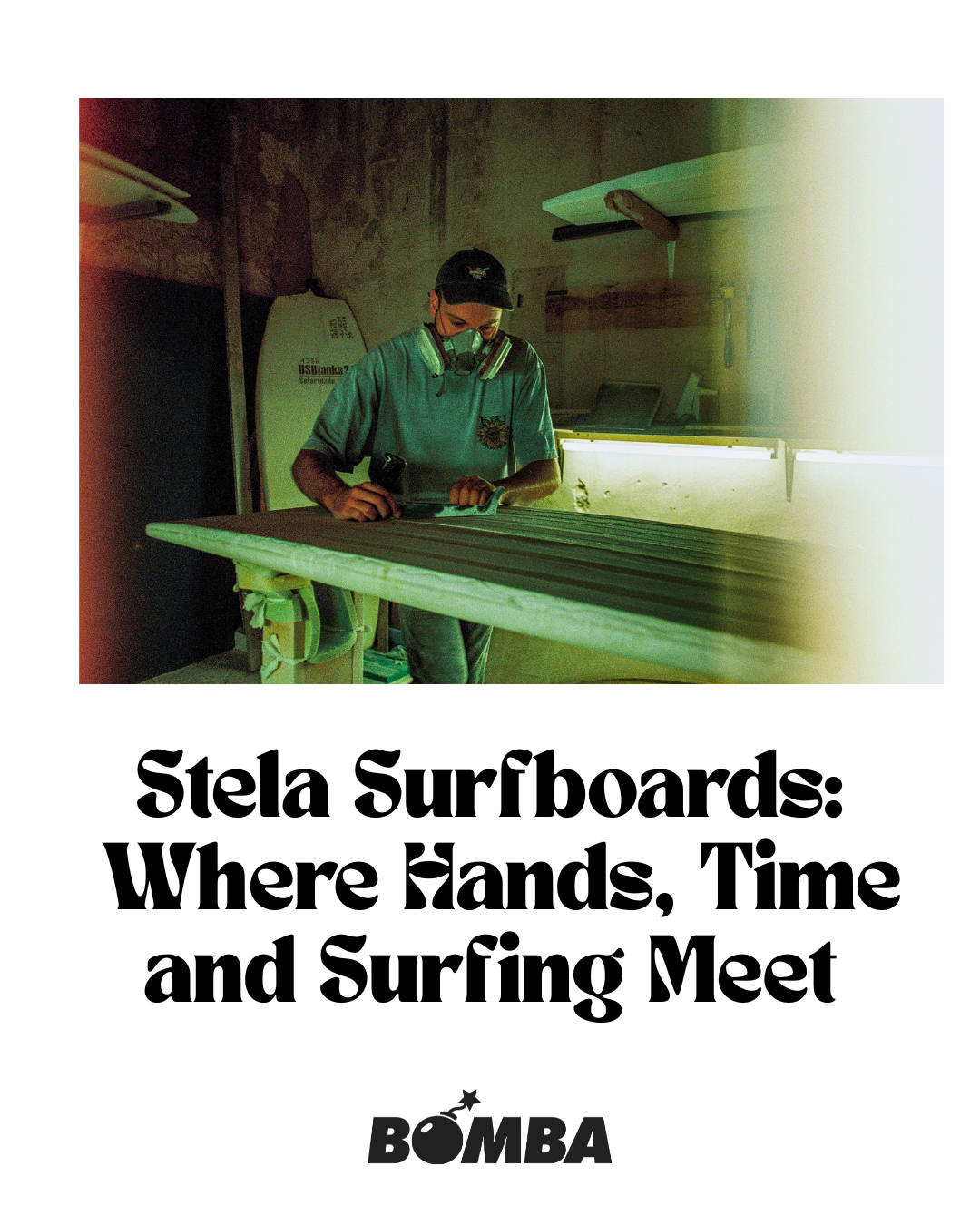
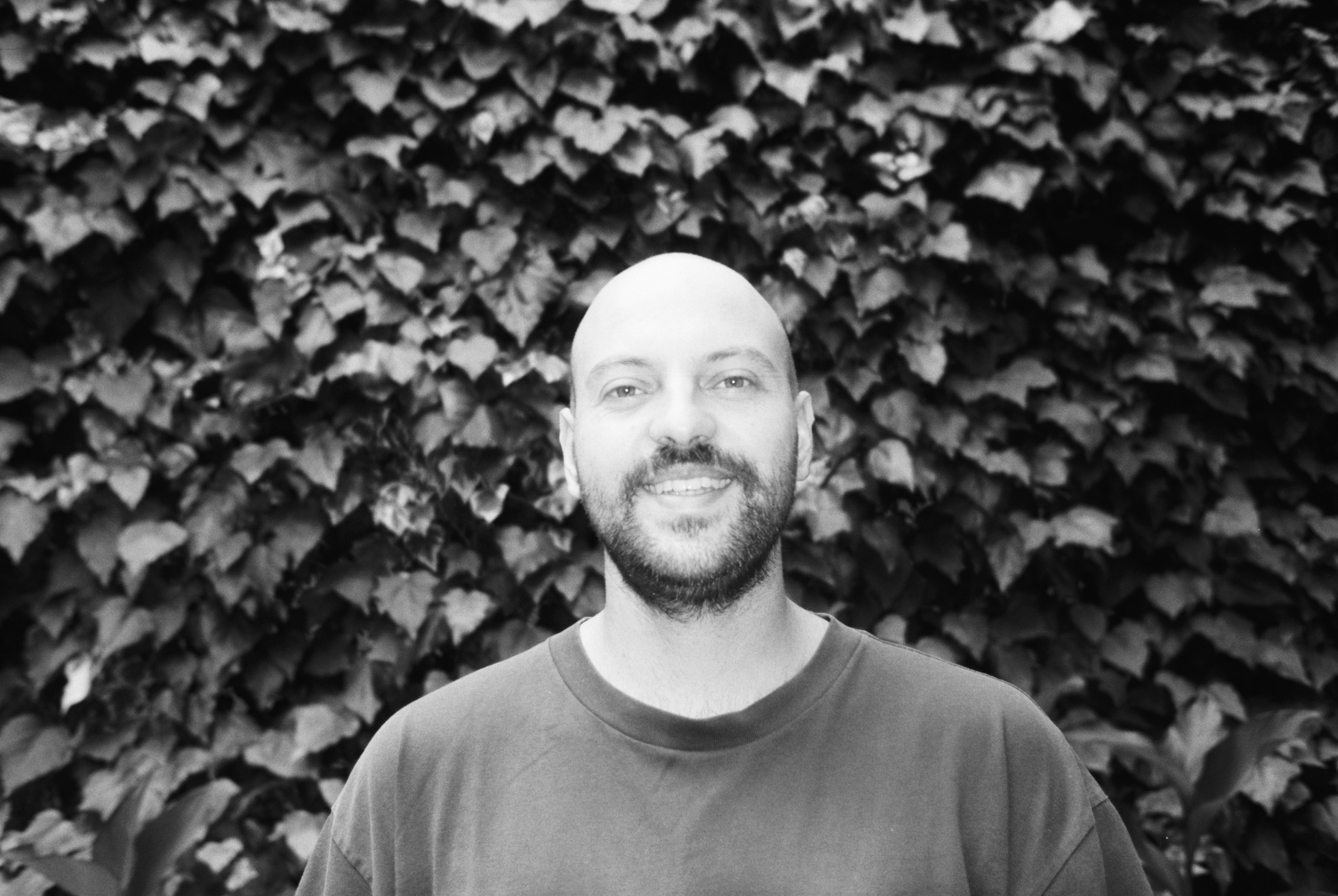
Some people come to shaping because they surf. Others come to surfing because they shape. Toni Pujadas, founder and owner of Stela Surfboards, sits somewhere in between, not because he planned it that way, but because making things with his hands was already part of who he was long before surfboards entered the picture.
“Surfing was always in my head,” he says. “I was thinking about it all the time.”
At the same time, he was constantly building, experimenting, and trying to understand how things worked. Making objects from scratch wasn’t a hobby so much as a natural instinct, a way of interacting with the world that felt intuitive to him rather than learned.
“I like to do stuff with my hands,” Toni explains. “I always try to make my own things.”
At one point, that instinct led him to build a guitar entirely by himself, without fully knowing whether it would work or not. It did.
“It worked perfectly,” he says, still sounding slightly surprised. “I was like, wow.”
That moment mattered more than it probably seemed at the time, because it proved something fundamental: that with patience, attention, and care, it was possible to turn raw materials into something functional, something alive. Surfboards would come later, but the foundation was already there.
Interestingly, shaping came before surfing in Toni’s mind. The idea of creating a board existed before he felt ready to ride one of his own, largely because he quickly realised how complex the process actually was.
“I started searching for information and I saw it was pretty hard,” he says. “I didn’t have the materials, the tools, anything.”
So he took a step back, bought a second-hand board, and focused on surfing first, allowing himself the time to observe, to understand what boards did in the water before attempting to create one himself. That patience paid off when he eventually met the person who would push him from curiosity into commitment.
In Majorca, Toni crossed paths with a craftsman who was shaping wooden surfboards and guitars, someone who embodied a kind of quiet mastery that doesn’t rely on explanation or instruction.
“He was a legend,” Toni says simply. “I asked him about shaping and he was like, ‘Yeah man, do it.’”
Watching that man work, seeing the care and respect he had for the materials and the process, triggered something immediate and irreversible.
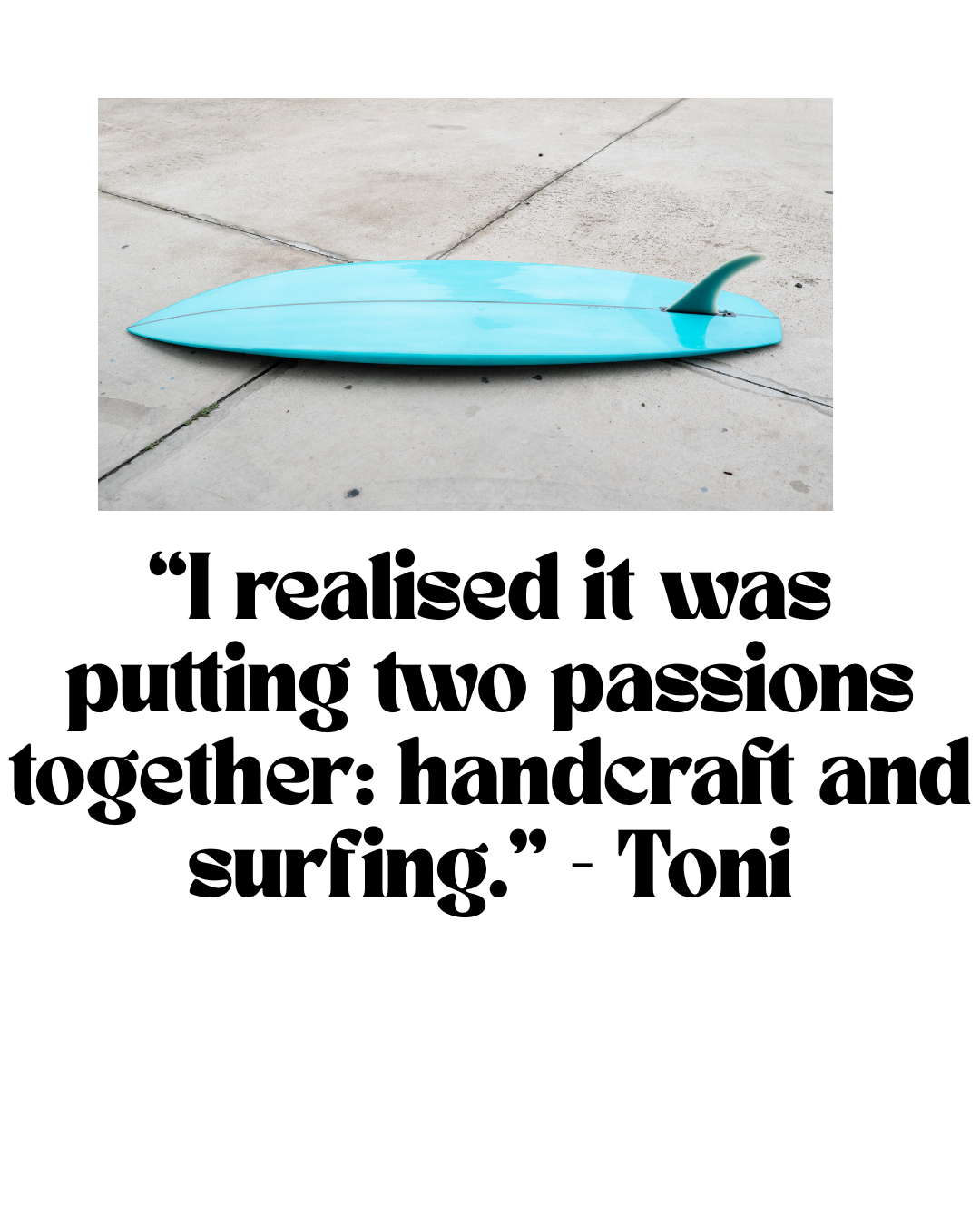
“It was a click in my head,” Toni explains. “I realised it was putting two passions together: handcraft and surfing.”
That was the beginning. Toni shaped his first board with guidance in 2015, and while the early years were full of experimentation, mistakes, and trial-and-error, they also laid the groundwork for everything that followed.
More than a decade later, he estimates he has shaped somewhere between 100-120 boards, most of them custom, each one informed by countless hours spent refining outlines, volumes, and feel.
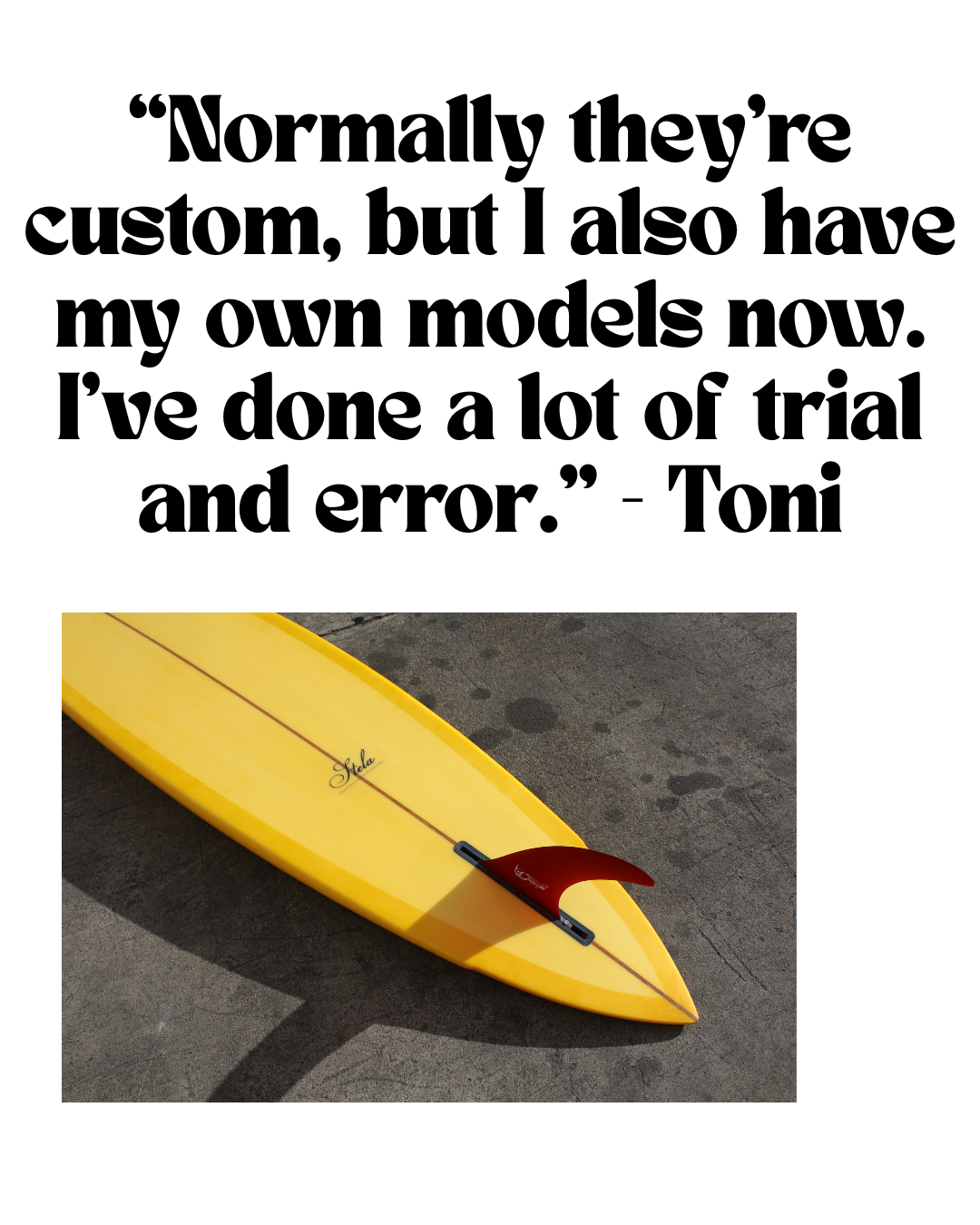
“Normally they’re custom,” he says. “But I also have my own models now. I’ve done a lot of trial and error.”
Toni keeps his construction traditional, favouring PU foam and polyester resin, materials he trusts not because they are fashionable, but because they feel right to him and align with the way he approaches shaping.
“I like the traditional construction,” he says. “That’s what I trust.”
When asked about favourite shapes, his answer comes without hesitation. The fish, with its curves and flow, remains the board he enjoys shaping the most, especially when paired with glass-on fins, where commitment replaces adjustability and the design becomes final the moment it’s finished.
“They’re amazing,” he says. “Sexy.”
In the water, his preferences mirror the same philosophy. After years of riding thrusters, twin fins, and twin pins, Toni finds himself drawn back to the simplicity and rhythm of single fins, particularly pin tails that reward patience and smooth, deliberate surfing.
“It feels very natural,” he explains. “The turning, the style.”
There is no rush in the way he surfs, and no rush in the way he shapes. Both are guided by feel rather than force, by understanding rather than urgency.
The surf community in Majorca reflects that same variety and contrast, ranging from surfers who treat every session like a competition to others who quietly operate at a high level without much attention.
“There’s everything,” Toni says. “Some really good surfers, some real chargers.”
Despite travelling to surf in places like Morocco, Indonesia, Portugal, and around Spain, Toni has kept Stela Surfboards rooted in Majorca, with most boards staying on the island and only a handful making their way to mainland Spain. Growth, for him, has never been about expansion for its own sake.
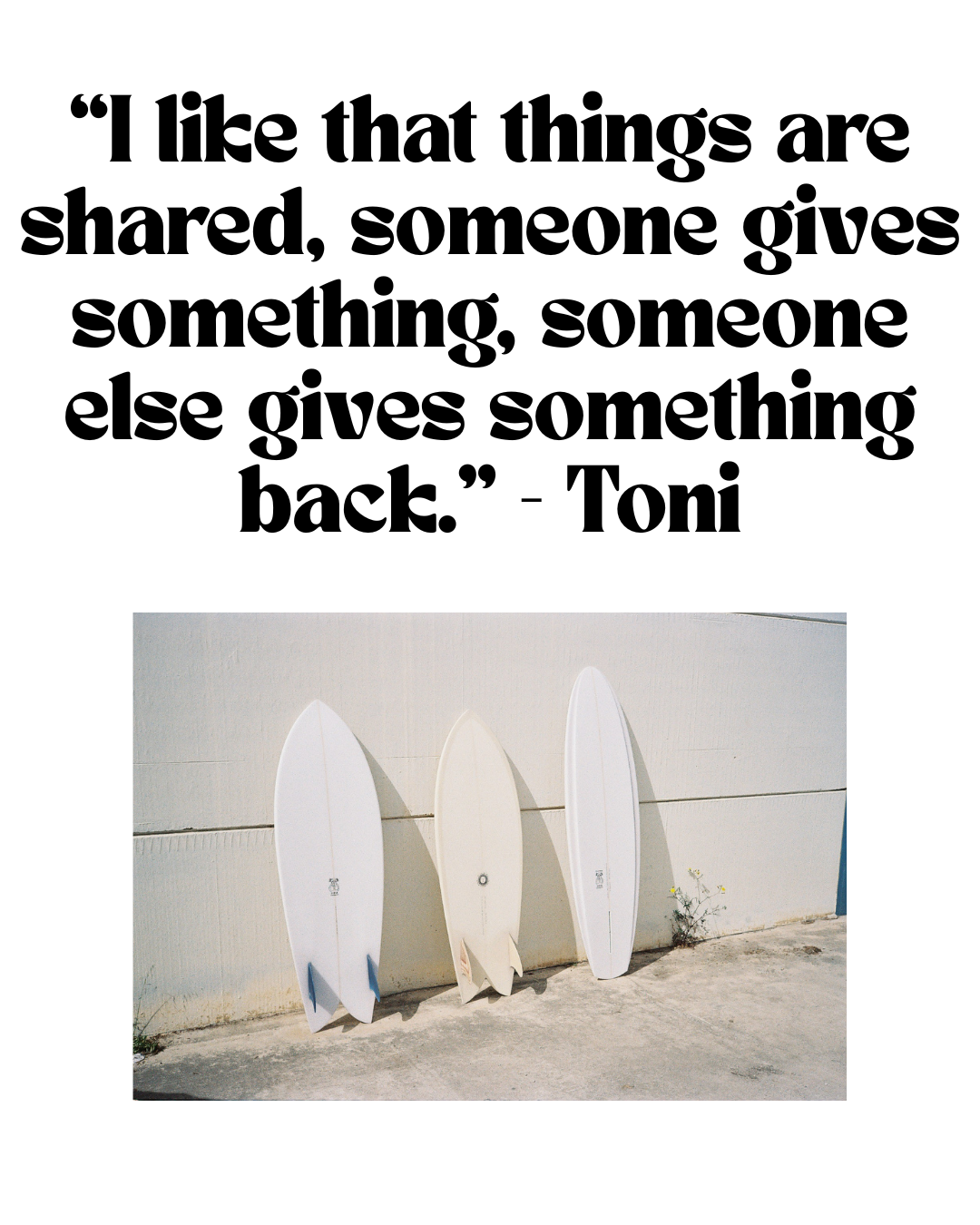
“I like that things are shared,” he says. “Someone gives something, someone else gives something back.”
Even the Stela logo reflects that mindset, designed by one of his surfers rather than commissioned or branded from the outside, reinforcing the idea that shaping, like surfing, works best as a collective effort rather than a closed system.
When asked whether shaping is something he wants to continue long-term, Toni doesn’t hesitate or dress the answer up.
“Yes,” he says. “Right now, shaping is the point.”
There’s no talk of scale, no plans for mass production, no attempt to turn craft into spectacle. Just a clear commitment to continuing a process that feels honest, grounded, and deeply personal.
“Shaping, man,” he says. “That’s it.”
And maybe that’s exactly why Stela Surfboards exists the way it does — not as a brand chasing attention, but as a quiet extension of someone who learned early on that building something properly, with time and care, is reason enough to keep going.