State Surfing Program Funding Sparks Controversy for Hawaii Charter Schools
Hawaii's new state funding for surfing as a varsity sport excludes charter schools, raising concerns about equitable access and financial burdens for student athletes.
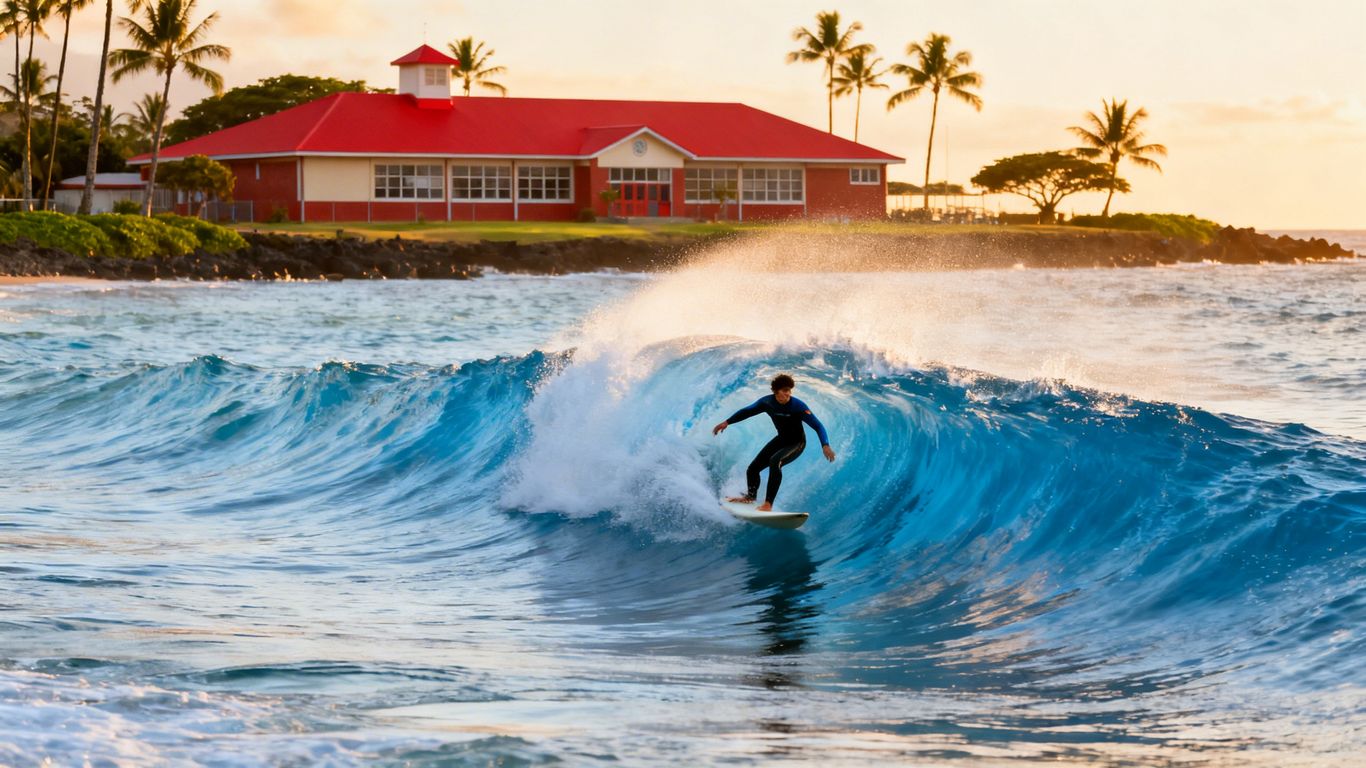
Hawaii is set to officially sanction surfing as a varsity sport with over $686,000 in state funding allocated for the next two fiscal years. However, this significant investment has drawn criticism as it explicitly excludes public charter schools, despite their students competing in the same athletic leagues. This decision has raised concerns about equitable opportunities for all public school students in the state.
Key Takeaways
- $686,870 in state funds allocated for surfing as a sanctioned varsity sport.
- Funding covers the next two fiscal years.
- Public charter schools are excluded from this specific funding.
- Concerns raised about financial strain and equitable access for charter school athletes.
Surfing Becomes Official Varsity Sport
The Hawaii State Legislature has appropriated over $686,870 to establish surfing as an official interscholastic high school sport. This funding is intended to support the development and sanctioning of boys' and girls' surfing teams across the state's major high school athletic leagues, with teams expected to begin competing next week.
Charter Schools Left Out
Despite the enthusiasm for surfing as a recognized sport, a significant point of contention has emerged: the exclusion of public charter schools from the state funding. The Hawaii Department of Education confirmed that the funds were designated solely for Department of Education schools. In a statement, the DOE explained that "Charter schools operate independently and receive funding for athletics directly through legislative appropriations rather than through the Department."
Financial Strain on Charter Schools
This exclusion has created financial challenges for some charter schools. For instance, the Hawaii Academy of Arts and Science (HAAS) in Pahoa, which had its original surf break destroyed by the 2018 Kilauea eruption, now faces substantial travel costs to practice. School leaders estimate that coaching and travel expenses alone can range from $10,000 to $15,000 annually, not including equipment replacement. Water sports, in general, are noted for their high costs due to the need for specific adult-to-student supervision ratios.
Calls for Equity
Parents and students argue that the distinction between DOE and charter schools should not impact athletic opportunities. "It needs to be rectified because they're all public school students," stated Nadia Ranne, a parent whose children compete on a charter school surf team. Student athlete Alex Ranne echoed this sentiment, emphasizing that "everyone should be given the same opportunities" as surfing is an expensive sport regardless of the school type.
The Hawaii State Public Charter School Commission acknowledged the cultural significance of surfing in Hawaii and expressed hope for future funding allocations. They noted that many charter schools actively promote these cultural practices through their surf teams and believe that with adequate funding, more charter schools could participate in interscholastic surfing.
Sources
- State surf funding of $686K excludes charter schools, Hawaii News Now.
- State surf funding of $686K excludes charter schools, Hawaii News Now.