Billabong History: From a Kitchen Table to Quikbong
· 5 min read
Founder & Editor
Mark doesn't wait around. If there's a wave, an idea, or a bad decision to be made, he's already in it.
Billabong history from Gordon Merchant's Gold Coast kitchen table in 1973 to the Quikbong merger: the founders, the name, the logo and who owns it now.
Surf culture history
Before the share price, the private equity and the merger with its oldest rival, Billabong was a pair of boardshorts cut out on a kitchen table on the Gold Coast. Tougher than anything else in the water, sold one pair at a time to the local surf shops. For three decades that was enough to make it one of the coolest names in surfing. Then it nearly wasn't enough to keep it alive.
1973: A kitchen table at Burleigh
Gordon Merchant was an ex-Maroubra surfer and board shaper who, like plenty of Sydney surfers in the late 60s, packed a Kombi with boards and drove north looking for warmer water. He found it on the Gold Coast, where you can wear boardshorts for most of the year.
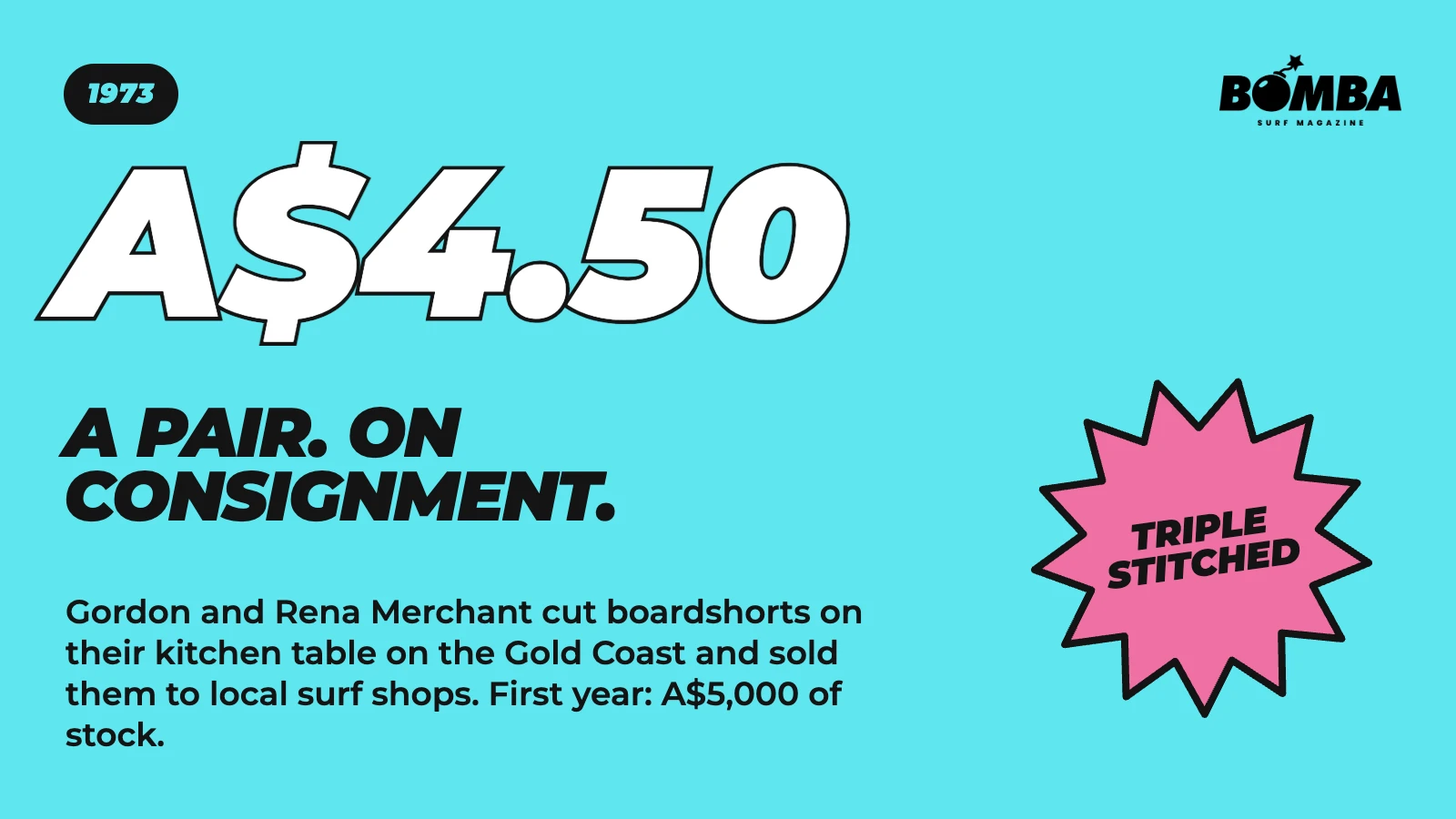
In 1973 Gordon and his then partner Rena started making boardshorts at home in Burleigh Heads. They cut them out on the kitchen table and sold them to local surf shops on consignment for A$4.50 a pair, moving about A$5,000 worth in the first year. The selling point was simple: Gordon's triple-stitching meant the shorts didn't blow out in a decent swell.
Even the name is local. "Billabong" comes from the Wiradjuri word for a creek that only runs in the rainy season.
The surfers made the brand
From the start Billabong put the best local surfers in its shorts and in its ads. Over the decades the team read like a who's who: Wayne "Rabbit" Bartholomew, Joel Parkinson, Taj Burrow, Occy and, above all, Andy Irons.
Billabong also built events at the heaviest waves on earth. Its name went on the contest at Teahupoo, on Jeffreys Bay, and on the Pipe Masters, the most prestigious title on tour. Billabong didn't just sponsor surfing, it attached itself to the waves that scared people.
Andy Irons: the rider who defined it
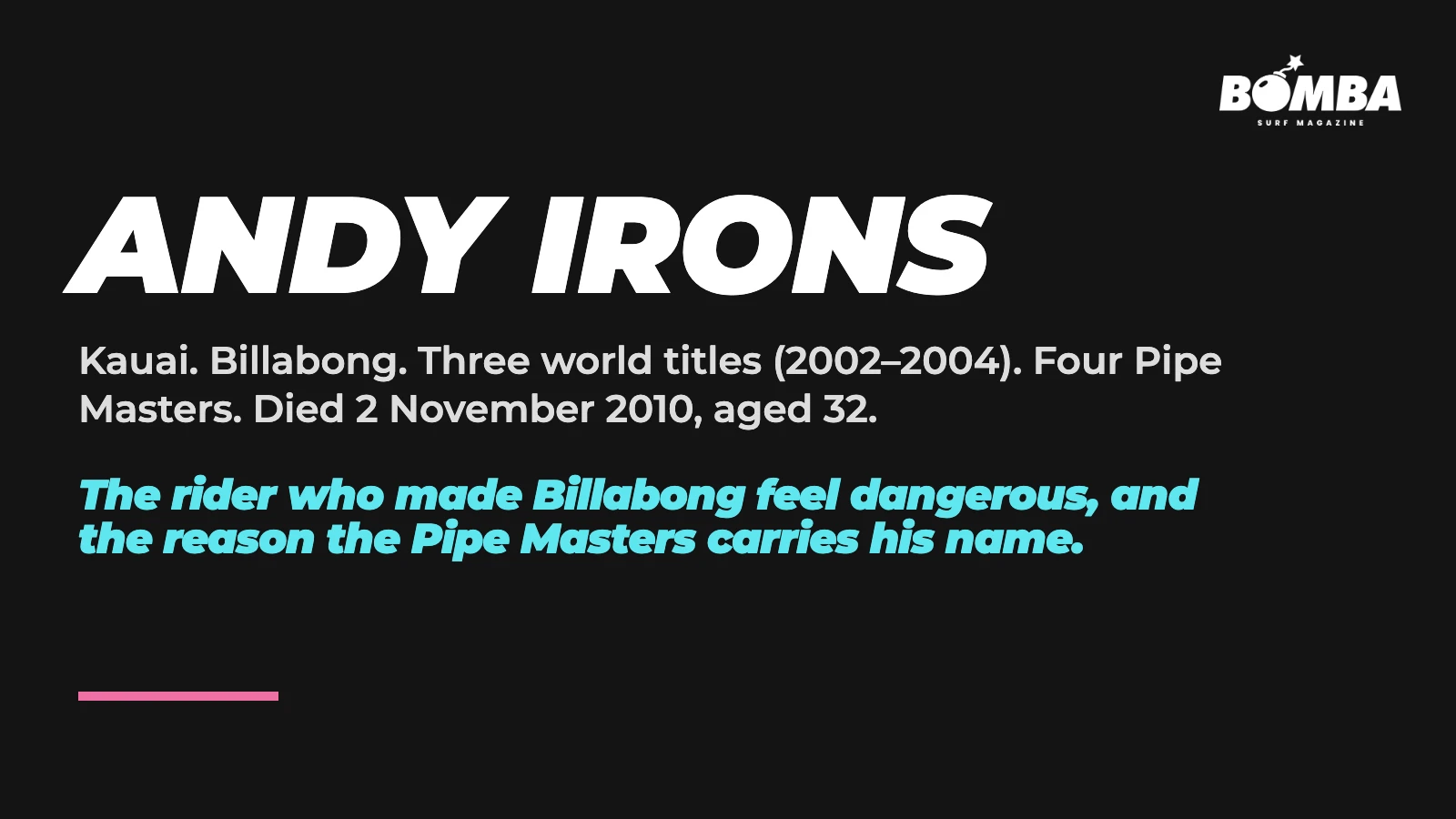
Andy Irons from Kauai was Billabong's ultimate team rider. He won three straight world titles from 2002 to 2004, beating a peak-era Kelly Slater, and took four Pipe Masters titles. His surfing at Teahupoo and Pipe was the brand's whole personality: fast, heavy and slightly out of control.
After stepping back from the tour in 2009, Andy came back in 2010 and won the Billabong Pro Tahiti. Two months later, on 2 November 2010, he was found dead in a hotel near Dallas while travelling home to Kauai. He was 32. Billabong had his own line of boardshorts, and the Pipe Masters was later run in his memory.
2000–2008: Going public and going shopping
Billabong listed on the Australian Securities Exchange on 11 August 2000. The listing gave it cash, and it spent it. Von Zipper eyewear and Element skateboards came in 2001, Kustom footwear and Palmers Surf in 2004, Nixon watches in 2006, Xcel wetsuits and Tigerlily swimwear in 2007, then DaKine and RVCA. It also bought surf shop chains.
Looking back, analysts said the big surf groups all bought brands at a premium in the boom years, and when the global financial crisis hit, those assets tanked. Billabong had turned from a boardshort maker into a debt-heavy brand collector at exactly the wrong moment.
2012: The offer they said no to
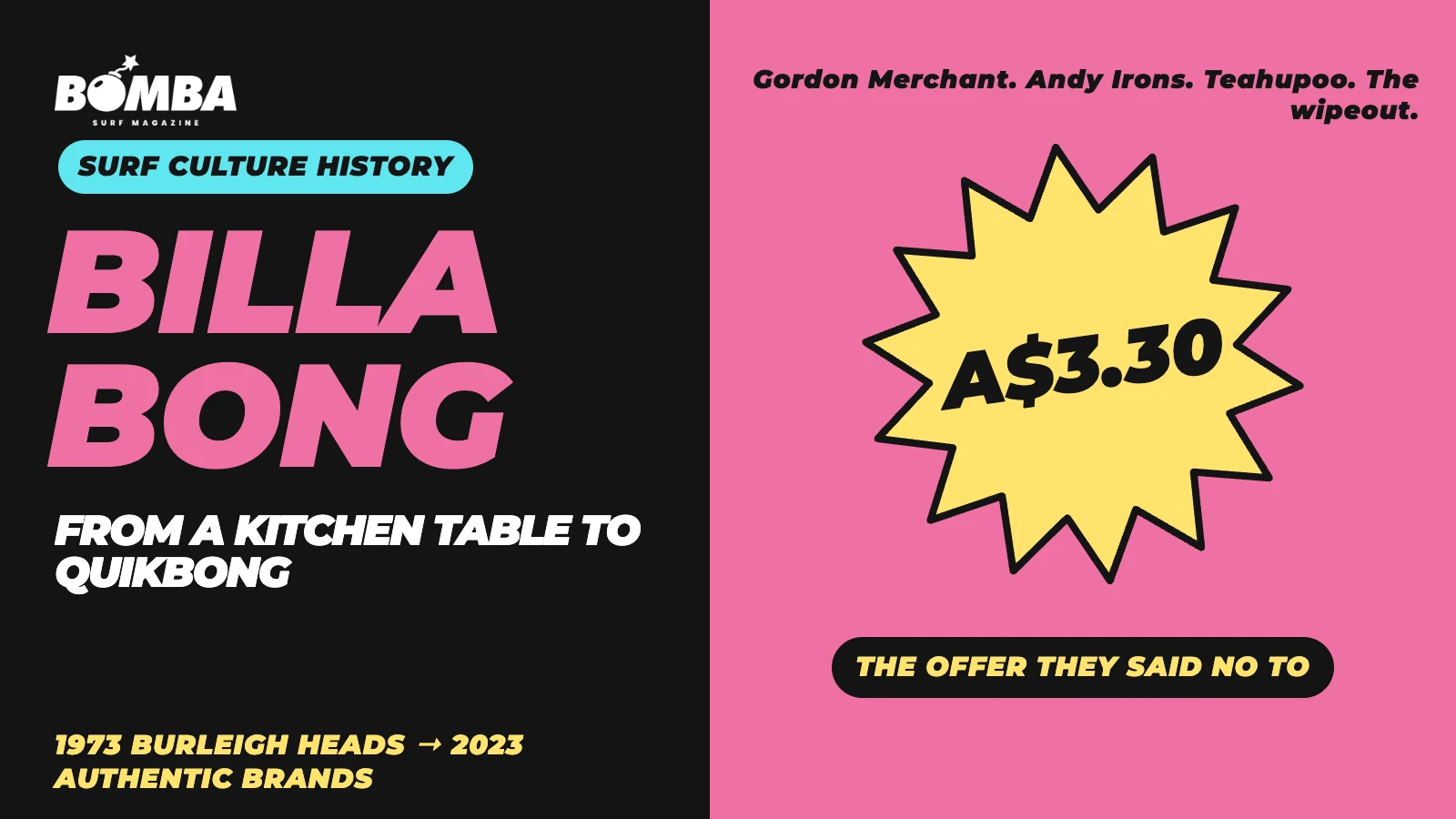
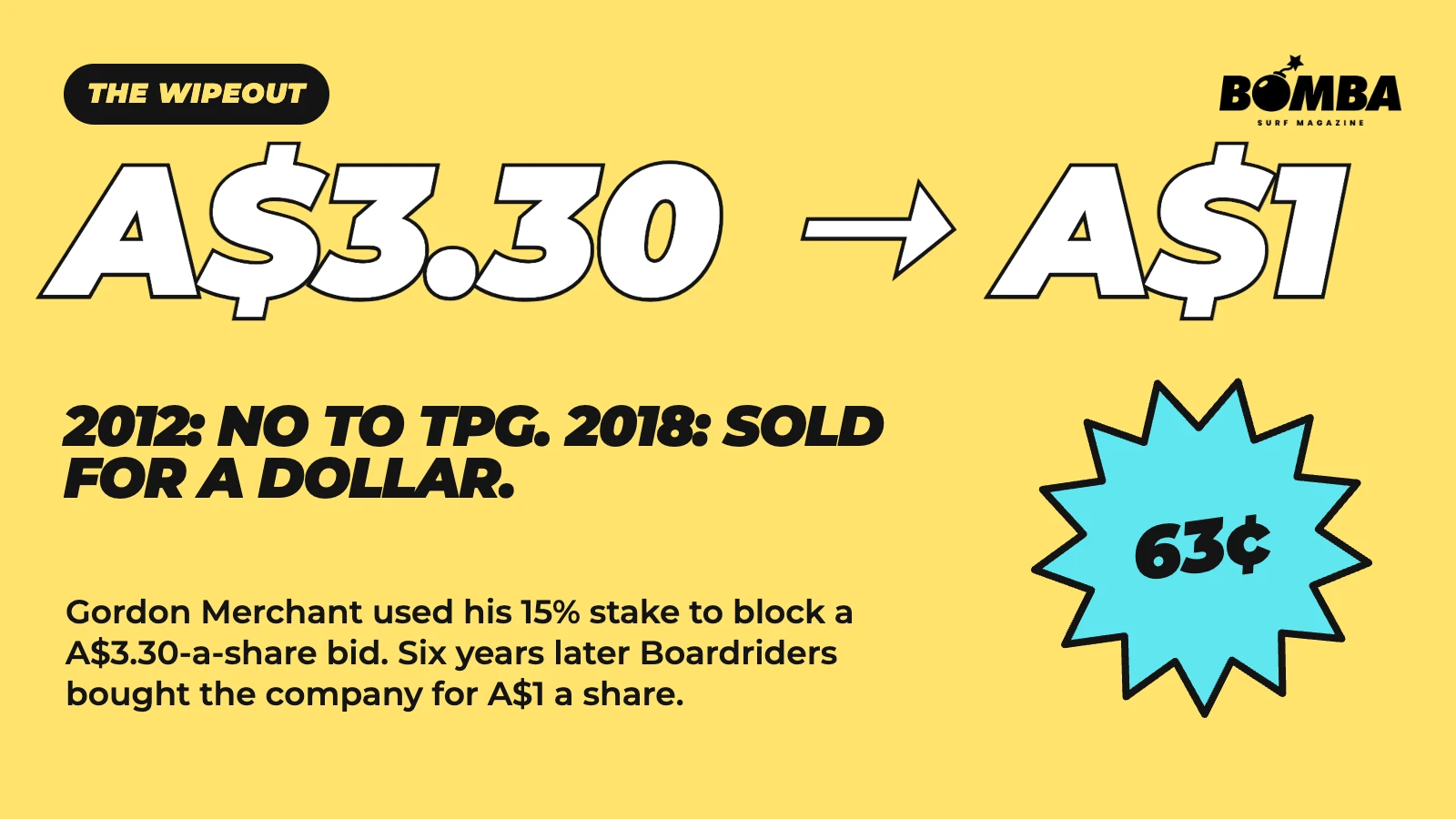
In February 2012 US private equity firm TPG offered to buy Billabong for A$3.30 a share, around A$850 million. The board said it was too low. Gordon Merchant, who still held about 15% of the company, blocked it.
It was the most expensive "no" in surf history. TPG and Bain Capital came back later in 2012 at A$1.45 a share, then both walked away after looking at the books. Further offers sank to A$1.10, then 60 cents. The shares hit a record low of 63 cents, and in the six months to December 2012 Billabong lost A$536 million.
In 2013 the company was kept afloat by refinancing from US funds including Oaktree Capital and Centerbridge, who ended up controlling around 40% of the shares. Remember the name Oaktree.
2018: Quikbong
By 2018 Oaktree also owned most of Quiksilver, by then renamed Boardriders after its own bankruptcy. Putting the two together was the obvious play. Boardriders offered A$1 cash per Billabong share, a long way from A$3.30, and the two great Australian rivals of the 70s ended up under one roof.
In 2023 Oaktree sold Boardriders, Billabong included, to Authentic Brands Group for more than US$1.25 billion. Authentic licenses the logo to operators rather than running the business itself, which is why the brand now reaches you through a patchwork of partners around the world.
Why it still matters
Strip out the corporate saga and Billabong's story is the same as every great surf brand's: a surfer made something better for surfers, and real surfers made it famous. The triple-stitched boardshort, the Pipe Masters, Andy at Teahupoo. That's the bit worth remembering.
The lesson, again, is to stay close to the water. Billabong was massive when it was a surf company. It nearly drowned when it became a portfolio.
Read next: The highs and lows of Quiksilver, the rival that ended up owning it.
Timeline
1973: Gordon and Rena Merchant start making boardshorts at Burleigh Heads
2000: Lists on the ASX
2001–2010: Buys Von Zipper, Element, Kustom, Nixon, Xcel, Tigerlily, DaKine, RVCA
2002–2004: Andy Irons wins three straight world titles
2010: Andy Irons wins the Billabong Pro Tahiti; dies in November aged 32
2012: Rejects TPG's A$3.30-a-share bid; shares slide to a record low
2013: Rescued by refinancing from Oaktree and Centerbridge
2018: Bought by Quiksilver owner Boardriders for A$1 a share
2023: Authentic Brands Group buys Boardriders
Frequently asked questions
Who founded Billabong?
Gordon Merchant and Rena Merchant started Billabong on the Gold Coast, Australia, in 1973, making boardshorts at home before it grew into one of surfing's biggest brands.
What does Billabong mean?
A billabong is an Australian word for a waterhole or pool left behind when a river changes course.
Who owns Billabong now?
Billabong joined Quiksilver under Boardriders in 2018. Authentic Brands Group bought Boardriders in 2023, so it now owns both brands.
Sources